
Cholesterol Basics for the Mid Life Woman
It is characteristic of the perimenopausal years for our cholesterol numbers to start creeping up, and I was told to my face by my doctor that there was nothing you could do about it.
There are a number of reasons for the mid-life creep:
- Oestrogen plays a protective role by increasing the LDL receptors in the liver, which clear LDL cholesterol (the “bad” one).
- Oestrogen also influences the liver’s production of Lipoproteins. These lipoproteins precursor to LDL cholesterol. Less Oestrogen can increase the liver’s production.
- Oestrogen also helps break down triglycerides. You guessed it, less Oestrogen means more triglycerides circulating your body.
With Oestrogen declining in perimenopause, before flatlining at Menopause, you have less resources to manage your cholesterol than you did before. Even independent of cholesterol, your arteries are likely to harden because Oestrogen has a role in inflammation and the plasticity of your blood vessels and cell walls.

However, many of these changes can be managed if you modify your lifestyle factors – ie. control what you can control. I learned this only recently; my doctor has said there was nothing i could do, and i took her word for it, but then a client showed up to training having successfully gotten her LDL cholesterol down through diet! This was the prompt for me to revisit the topic.
Number 1) You have to be mindful of your saturated fat intake.
This was hard for me because i was trying to get my protein in through food sources, and one of those sources was red meat. I am also a cheese fiend, like many of us!! First things first, i would recommend reducing red meat (but not cutting it out). Choose lean cuts, and cut off the fat. Avoid processed meats, including ham, bacon meatballs, sausages, etc, and replace them with fish, kangaroo, goat, pork (steaks), and seafood.
I also purchased the Chief unflavoured whey protein, which has nothing except whey protein in it, so that i can top up my protein if i have not hit my target through diet alone.
For cheese, you can make the switch to got cheeses, then choose the low salt varieties (like mozzarella). For me, I rarely consume tasty, feta, halloumi, and cow cheeses anymore (but not never!).
Number 2) Fibre is king
If you are getting your 9 serves a day, including legumes, then you are well on your way to clearing excess cholesterol. Beans, artichokes, flax and chia seeds are all beneficial to your cholesterol balance. Legumes, including peas, lentils, and beans also contain a very weak, but very useful form of Oestrogen too, which can help keep your LDL under control.
Number 3) Eat HDL cholesterol.
HDL cholesterol can neutralize LDL cholesterol. Healthy HDL cholesterol can be found in eggs, avocado, fish, and raw nuts and seeds.
4) Supplements
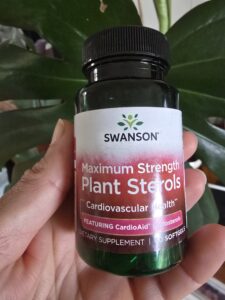
I was shocked to discover that Plant Sterols have a similar impact on cholesterol levels as statins, without the side effects. I buy the Maximum Strength Plant Sterols from Swanson (iherb), which halved my LDL cholesterol within just one month of taking them.
There are also chemical compounds in barberries and artichokes that have been shown to have a similar effect, but interestingly, only in their food form, not supplement form. 2T barberries per day gets you adequate berberine. It is preferred you consume freshly cooked artichokes (the jar and can forms have excess plant oils and salt). Half an artichoke a day gets you sufficient bioactive compounds (such as cynarin, luteolin, and chlorogenic acid), which have been shown to interfere with cholesterol production and promote its clearance from the bloodstream. If you buy them in a jar, rinse them well before consuming.
All of this advice comes from Dr Gregor’s “Lower Cholesterol Naturally with Food”. He also has a free app, which you can download from google play here, or the apple store here, where you can check off all your cholesterol lowering foods each day.